Axial control & myopia prevention
The full pathway of a decade of CAS research: over 100 macaques over eight years, deployment in 118 schools, follow-up on 4,000+ students.
- Study period
- 2012–2022
- Animal study
- over 100 macaques · 8 years
- School pilot
- 118 schools · 10,000+ students
- Follow-up
- 4,000+ students
- Myopia growth
- 5.8% vs 8.8%
1. The scale of the problem
World Health Organization research reports a large adolescent myopia burden in China, with more than 700 million people affected. In 2021 the overall rate among children and adolescents reached 52.7%: 14.3% of six-year-olds, 35.6% of primary pupils, 71.1% of junior-high students and 80.5% of senior-high students. Later reporting puts the senior-high figure above 90%.
| School stage | Myopia rate, 2021 |
|---|---|
| Children aged 6 | |
| Primary school | |
| Junior high | |
| Senior high | |
| All children and adolescents |
The five-health action plan for children and adolescents (2026–2030), issued by the National Health Commission and twelve other departments, targets a primary-school myopia rate below 32% and a junior-high rate below 60% by 2030. Myopia control is now national policy.
2. Mechanism: why axial length is the key
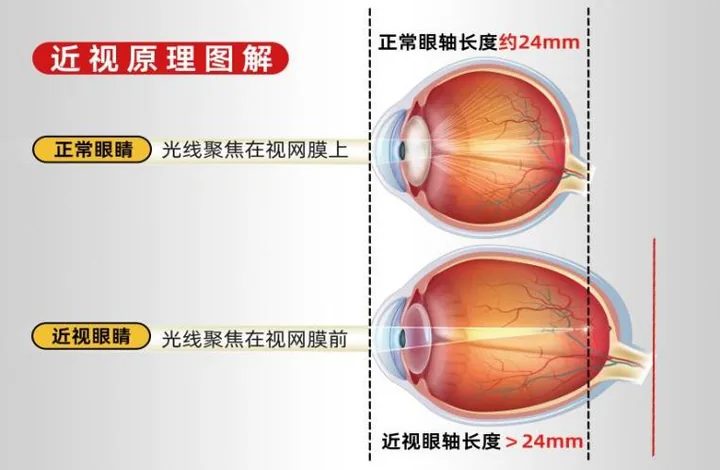
Most parents know myopia means seeing less clearly, but few know that excessive axial elongation is the central mechanism. The axial length runs from the cornea to the fovea — the eye’s “height” — and its rate of growth determines whether and how myopia develops.
| Item | Value | Why it matters |
|---|---|---|
| Axial length at birth | about 16–17 mm | The starting point. |
| Stable adult axial length | about 24 mm | The physiological end point. |
| Per 1 mm of elongation | 200–300 degrees of myopia may accrue | Control the axis, control the prescription. |
| Reversible? | essentially irreversible once elongated | Only mitigation of the growth rate is possible. |
The consequences go well beyond blurred vision. High myopia is a recognised major risk factor for several blinding eye diseases; damage from retinal detachment, macular degeneration and open-angle glaucoma is irreversible. It also closes off careers — military, police, aviation, precision instrumentation and firefighting all impose strict unaided-vision requirements. In China, complications driven by high myopia are now the leading cause of blindness, with more than 300,000 new cases of blindness each year.
The next ten to twenty years will be a period of explosive growth in blindness from high myopia in China. Society as a whole must act to hold the line for children’s vision.
The assessment above is from Academician Wang Ningli, a leading figure in ophthalmic myopia control in China.
3. Ten years: from the Radiance Initiative to Bright Eye Spring Rain
It begins in 2012. LED lighting was spreading fast across China, which quickly became the world’s largest LED market — yet the core patents were held abroad, leaving Chinese manufacturers as contract producers. More importantly, myopia rates were rising sharply as LED sources spread, and no one had run long-term systematic research on whether that light was safe for human eyes.
From 2012 to 2022, a multidisciplinary team of Chinese institutes led by Chief Scientist Academician Zhang Hongjie ran a ten-year programme — the “Radiance Initiative” and “Bright Eye Spring Rain” — on one question: how does light affect vision and higher brain function.
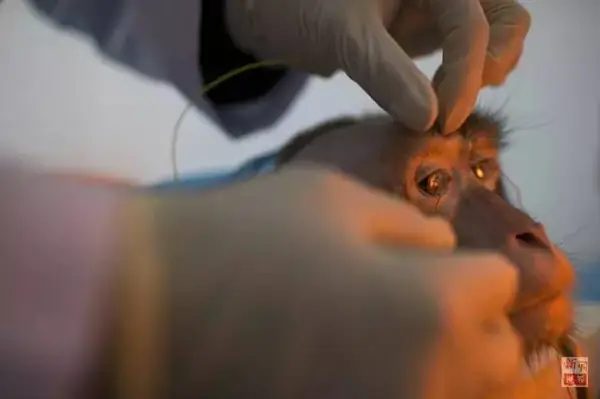
4. Animal work: over 100 macaques, eight years
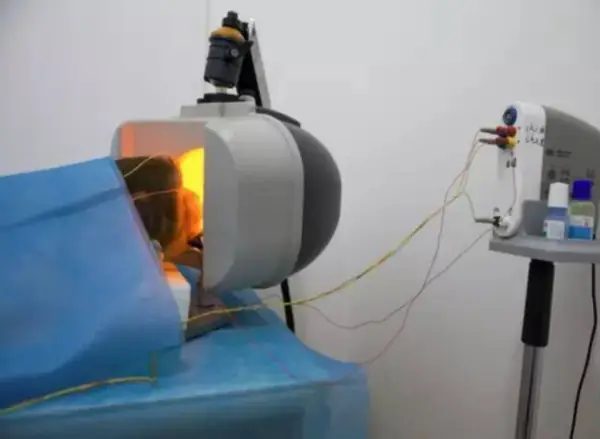
The first problem was choosing a model. Rodents and chickens differ from humans enormously and are too distantly related — their photobiological effects can even run in the opposite direction. The rhesus macaque’s visual system, by contrast, is closely matched to ours in anatomy, development and information processing, and its retinal spectral absorption peak is very close to the human one.
The work was led by Professor Hu Xintian’s team at the Kunming Institute of Zoology, built on three dimensions: sample allocation, longitudinal monitoring and execution standards.
| Dimension | Method | Rationale |
|---|---|---|
| Rigorous allocation | Precise grouping by study objective, 6–8 macaques per group — 8 rather than the international norm of 6. | Eight, not six, guards against individual animals dropping out over eight years, so at least six valid subjects remain. |
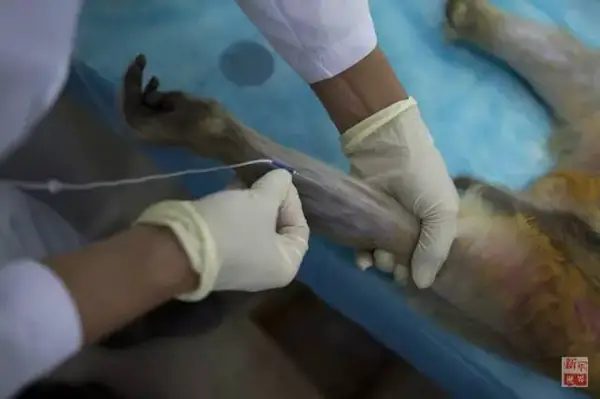
| Detailed monitoring | Monthly ERG and axial-length measurement. | Enough data density to catch subtle change, while limiting anaesthesia frequency in the interest of animal welfare. |
| Stringent standards | Conducted throughout to NIH standards. | The highest recognised standard for animal research, ensuring the data — and therefore the conclusion — withstands scrutiny. |
5. 118 schools: 12,000+ covered, 4,000+ followed
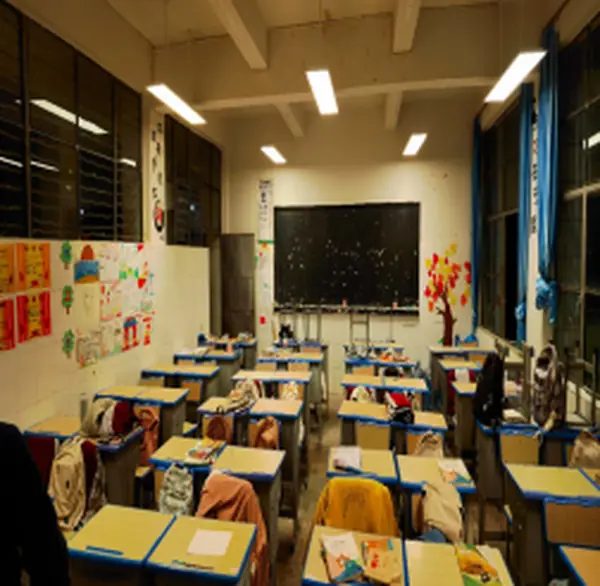
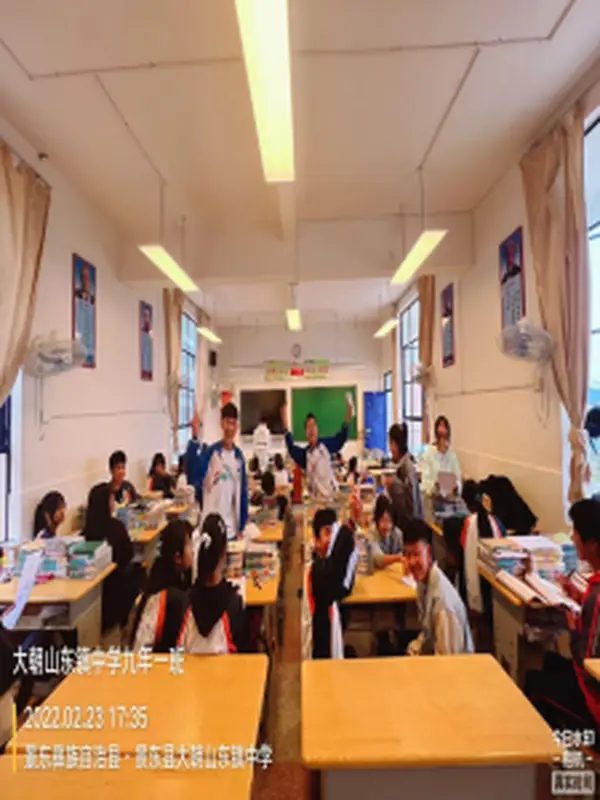
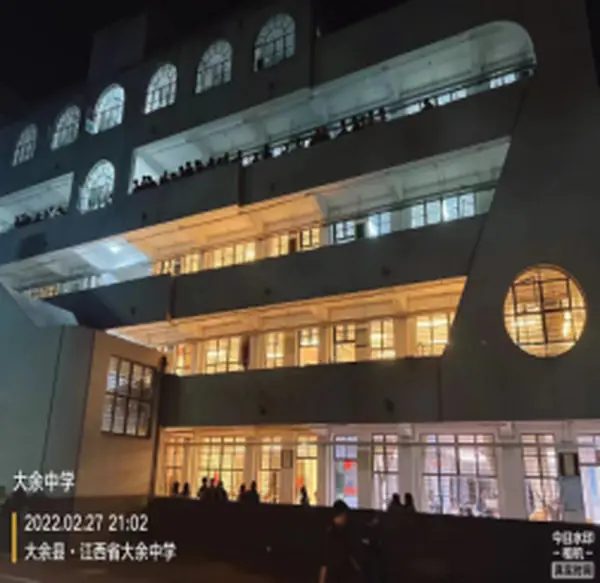
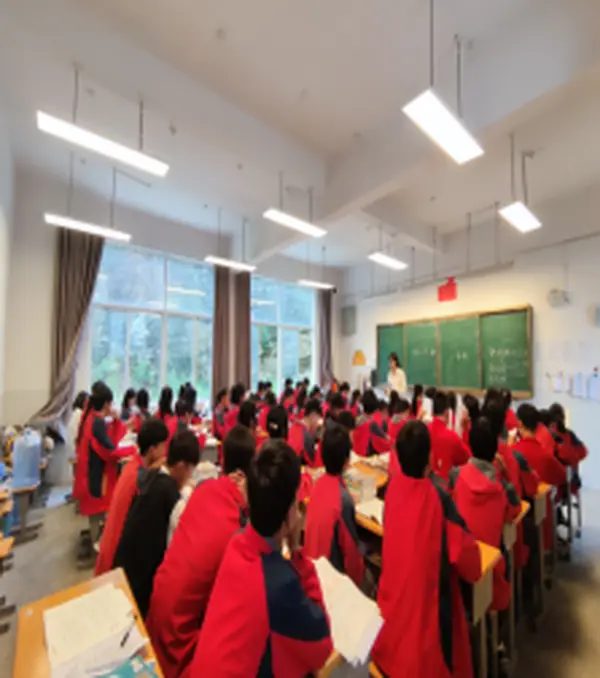
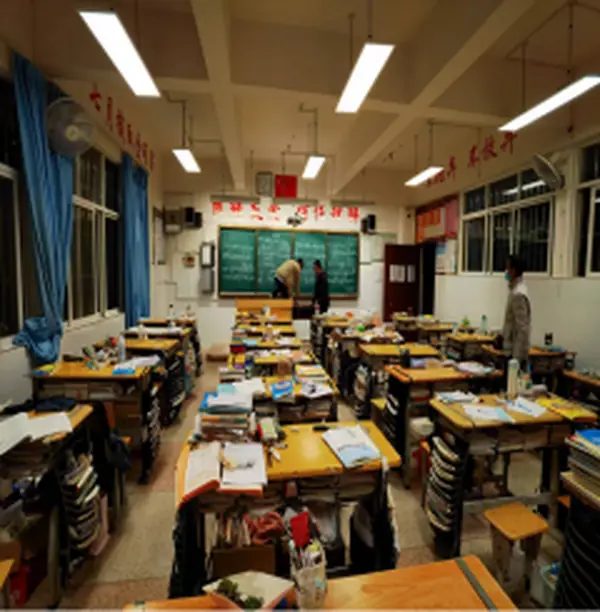
Animal work is only the first hurdle; the real test is human outcome. From September 2021 the team deployed the new luminaire in 118 schools across Yunnan, Jiangxi, Anhui, Shandong, Beijing and Changchun. Follow-up on more than 4,000 students to October 2022 produced the following result:
For scale: provincial targets generally ask for a 0.5% annual reduction in myopia growth, and even the worst-affected provinces ask for 1%. The effect measured here is three to six times those targets.
6. The core: a rare-earth phosphor
At its centre is a proprietary rare-earth phosphor developed by CIK Rare-earth. Rare-earth elements have a distinctive energy-level architecture and 4f-electron transitions — a precision instrument for tuning light, capable of producing a spectrum tailored to axial development in young eyes through careful formulation.

| Dimension | Versus an ordinary LED source |
|---|---|
| Suppressing axial elongation | Effectively suppresses excessive axial growth and reduces myopia onset. |
| Eye fatigue | Relieves eye fatigue. |
| Energy and life | Meets energy-efficiency and long-life requirements at the same time. |
| Intellectual property | The related patents are held by research institutions including the Kunming Institute of Zoology and the Changchun Institute of Applied Chemistry of the Chinese Academy of Sciences. SUFN holds an industrialisation licence and turns the technology into deliverable luminaires. |


7. How SUFN industrialised it
Whether breakthrough research reaches households depends entirely on industrialisation. In April 2026 SUFN signed a strategic agreement with the CAS rare-earth side. As a national high-tech enterprise and a specialised-and-refined SME, SUFN combines an in-house R&D centre and academic partnerships with Tsinghua University and a manufacturing base that has won the Red Dot, iF and Red Cotton awards.
CAS Mingmou eye-care spotlight
Cut-out options of 55, 65 and 75 mm; direct, tiltable or polarised output; six anti-glare reflector finishes for any specification.
CAS Mingmou eye-care LED tape
High-purity copper conductors for efficient, low-heat, durable operation; a precision-plated PCB for stability and interference resistance; 24 V low-voltage drive for a higher safety margin.
The jointly developed eye-care tape and spotlight serve both accent and ambient roles, combining spatial aesthetics with evidence-based vision protection in a complete eye-care lighting solution.
8. Frequently asked questions
QCan myopia be reversed?
Once the axial length elongates it does not shorten again. The only available intervention is to slow further growth. Treat any product claiming to “cure myopia” with caution.
QHow does a SUFN eye-care light differ from an ordinary “eye-care” lamp?
An ordinary “eye-care” lamp typically adjusts colour temperature and flicker control. CAS Mingmou uses a rare-earth phosphor developed by CIK Rare-earth, supported by eight years of work on more than more than 100 macaques, deployment in 118 schools and follow-up of 4,000+ students, and protected by invention and utility-model patents.
QCan an eye-care light replace an eye examination?
No. Lighting is an environmental intervention; axial-length measurement and refraction must be done by a clinical institution. An annual check for children, with lighting as one part of the everyday environment, is the sensible combination.
QAre the eye-care spotlights suitable for a child’s room?
Yes. Three cut-out sizes (55, 65, 75 mm) support recessed or pre-embedded installation. We recommend planning the colour temperature and dimming scheme together with the rest of the room rather than bolting on a separate circuit.
Let SUFN design your light environment
Send us your floor plan and design brief. Our lighting designers return a layered light plan with colour-temperature ratios, luminaire positions and a buildable product schedule within one business day.