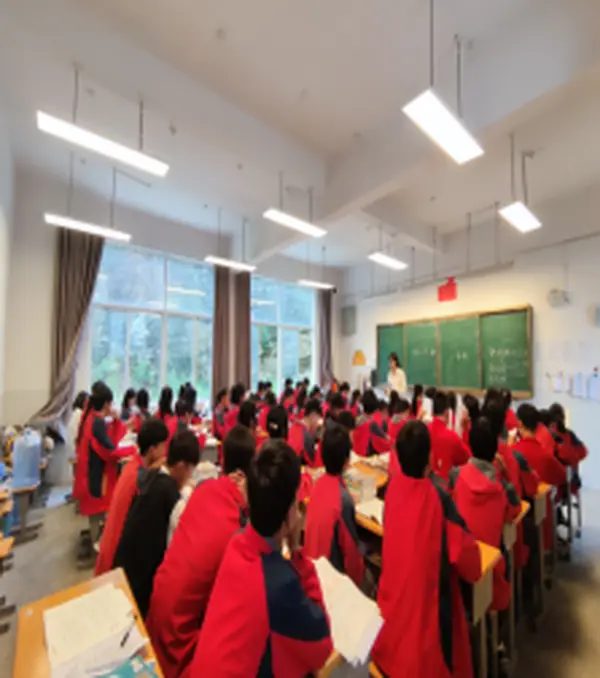
Eye-care lighting
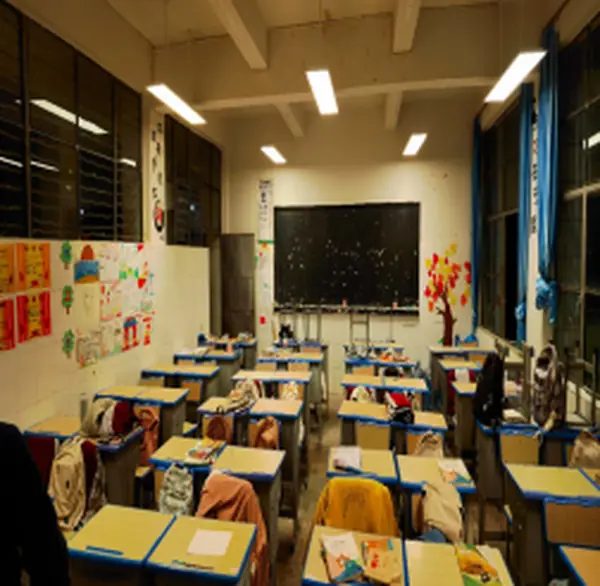
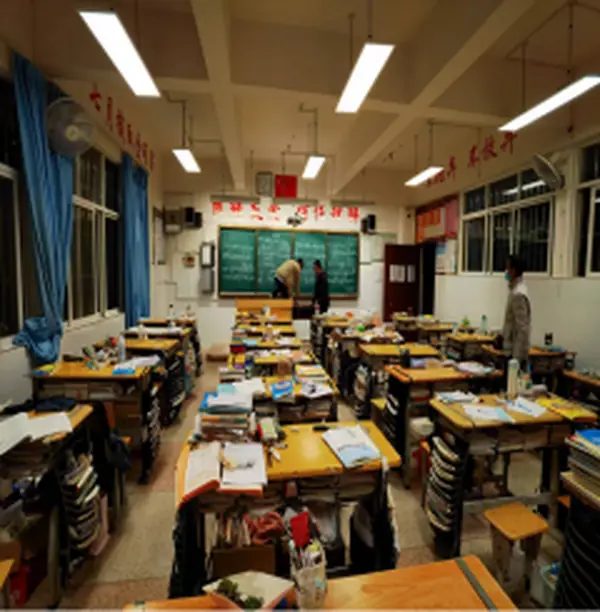
Ten years of research from 2012 to 2022 and eight years of work on more than 100 macaques; deployed in 118 schools from September 2021 and followed across 4,000+ students, with myopia growth at 5.8% against 8.8% in control classes.
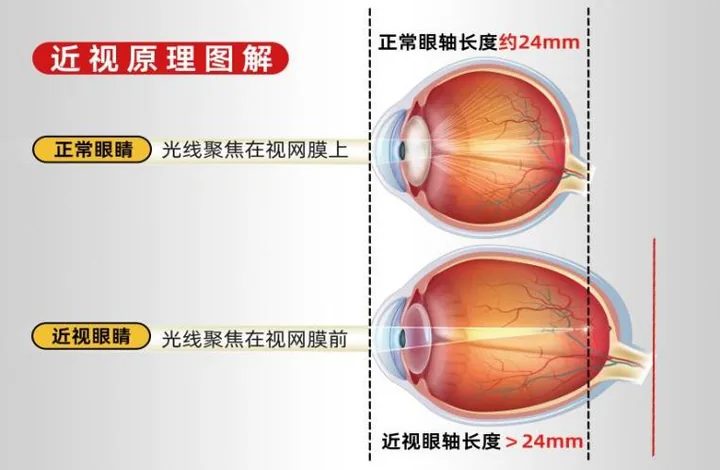
The variable that matters in myopia control is axial length, not illuminance. In 2021 the overall rate among Chinese children and adolescents was 52.7% — 35.6% in primary school, 71.1% in junior high and 80.5% in senior high. The axial length runs from cornea to the fovea, the eye’s “height”: 16–17 mm at birth, stabilising near 24 mm in adulthood, with each additional millimetre adding 200 to 300 degrees of myopia and never shortening again. Eye-care lighting works precisely on that pathway.
A decade of research, brought to market
Between 2012 and 2022 a multidisciplinary team led by Chief Scientist Academician Zhang Hongjie ran two programmes — the “Radiance Initiative” and the “Bright Eye Spring Rain” — on how light affects vision and higher brain function. Led by Professor Hu Xintian at the Kunming Institute of Zoology and uniting six disciplines — optics, systems integration, neurochemistry, rare-earth phosphors, medicine and electrical engineering — the animal work followed NIH standards and took eight years across more than 100 rhesus macaques.
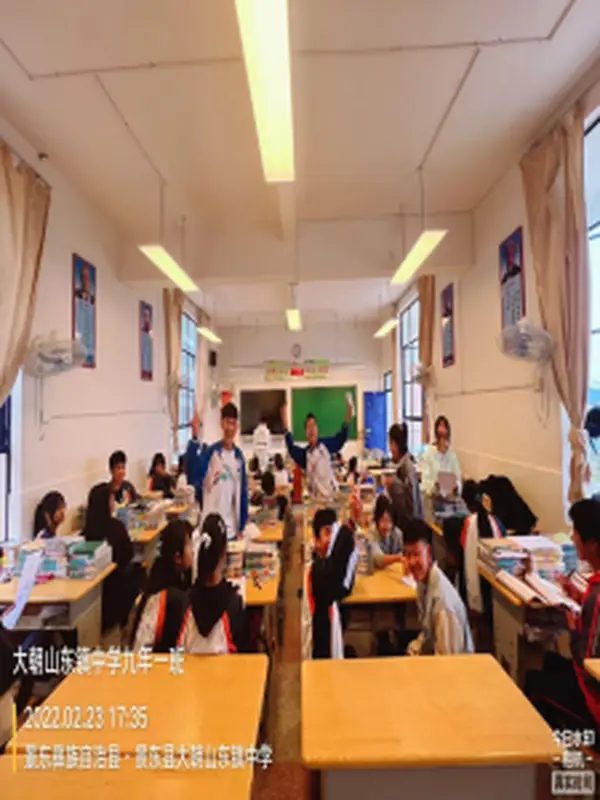
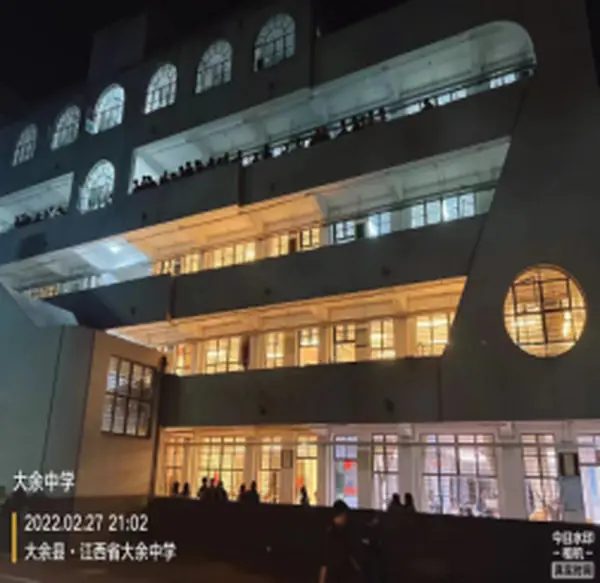
From September 2021 the new luminaires were rolled out in 118 schools across Yunnan, Jiangxi, Anhui, Shandong, Beijing and Changchun, reaching more than 12,000 students. The subset followed in the study is 4,000; the two figures measure different things. To October 2022, classes using the light showed a 5.8% myopia incidence growth rate against 8.8% in control classes — a three-percentage-point reduction. For scale, provincial targets generally ask for 0.5% annual reductions, rising to 1% in the worst-affected provinces.

The products and the core technology: CAS Mingmou spotlight and tape
At the centre is a proprietary rare-earth phosphor developed by CIK Rare-earth. Rare-earth elements have a distinctive energy-level architecture and 4f-electron transitions, so a carefully dosed blend can be tuned to a spectrum suited to axial development in young eyes. Compared with an ordinary LED source it suppresses excessive axial growth, reduces myopia onset and eases eye fatigue while remaining energy-efficient and long-lived.
Eye-care spotlight
Three cut-out sizes — 55, 65 and 75 mm — with direct, tiltable or polarised output and six anti-glare reflector finishes.
Eye-care LED tape
High-purity copper conductors for efficient, low-heat conduction; precision-plated PCB for stability and interference resistance; 24 V low-voltage drive for a higher safety margin.
| Item | Eye-care spotlight | Eye-care tape |
|---|---|---|
| Source technology | Rare-earth photobiological axial-control blend, co-developed with CIK Rare-earth | Rare-earth photobiological axial-control blend, co-developed with CIK Rare-earth |
| Cut-out | 55, 65 and 75 mm | Set by the profile width of the channel; per the specification sheet |
| Output mode | Direct, tiltable or polarised | Continuous output on a dimming circuit |
| Reflector | Six anti-glare reflector finishes | — |
| Materials & electrical | Aviation-grade aluminium body with a constant-current driver | High-purity copper conductors, precision-plated PCB, 24 V low voltage |
| Safety | — | 24 V low-voltage drive for a higher safety margin |
| Ingress protection | Per the current specification sheet; use the weather range in damp locations | Per the current specification sheet |
| Warranty | 3 years | 3 years |
Let SUFN design your light environment
Send us your floor plan and design brief. Our lighting designers return a layered light plan with colour-temperature ratios, luminaire positions and a buildable product schedule within one business day.